Rot-resistant, straight-grained and taller than anything else on the eastern Mediterranean coast — Lebanon cedar was the structural timber of choice for three thousand years.
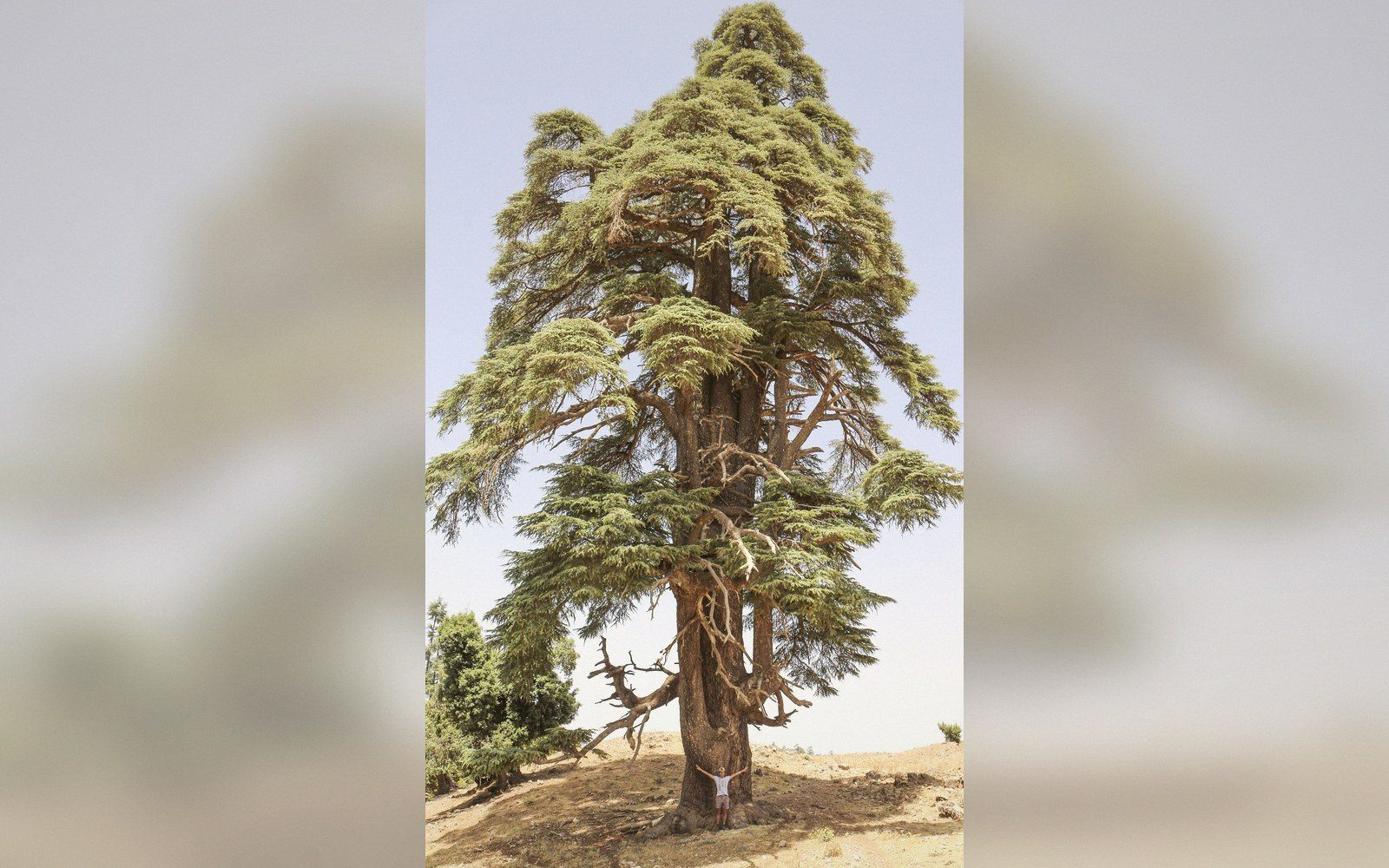 PLATE 1
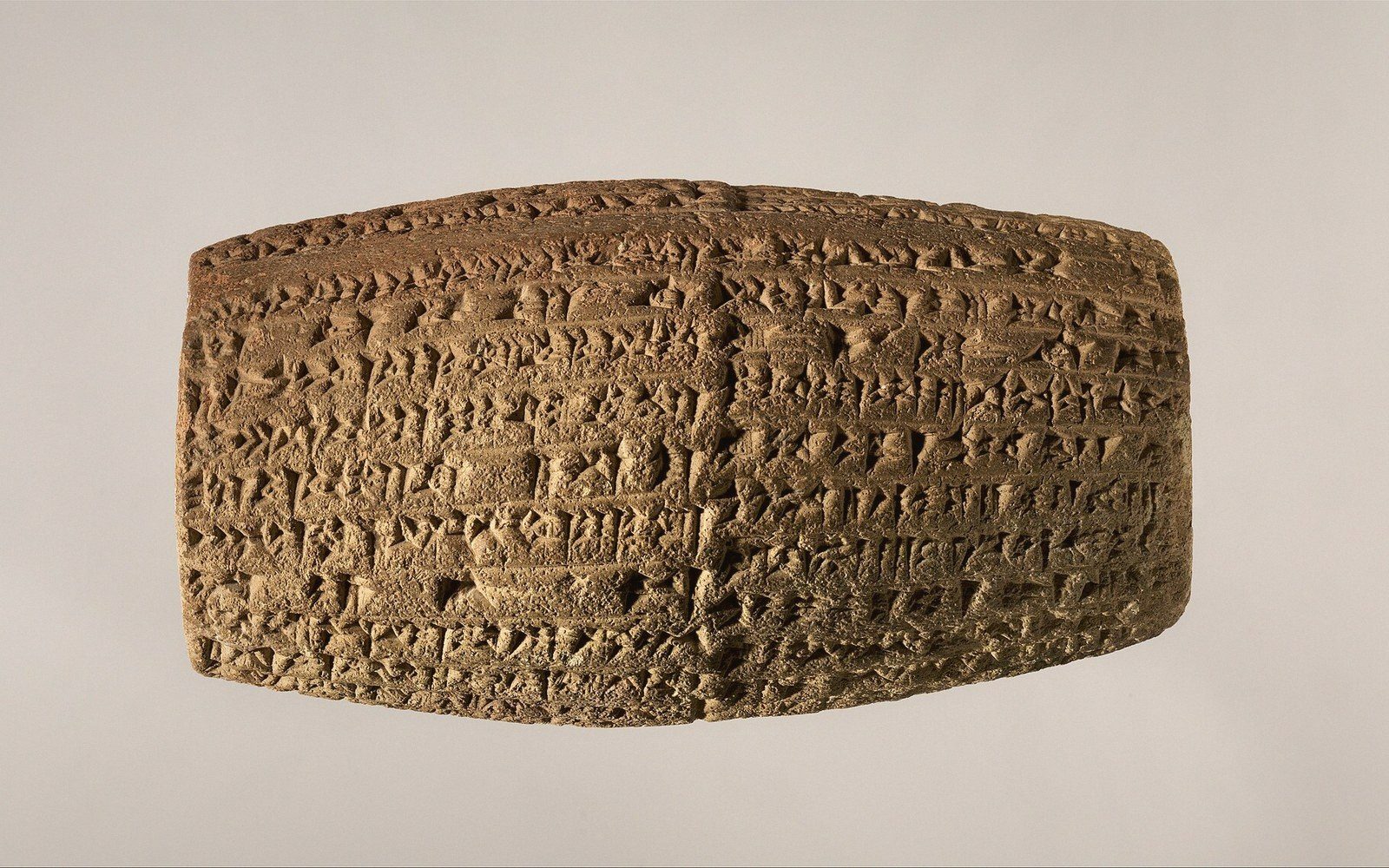 PLATE 2
The tree and what made it useful
Cedrus libani is not a cedar in the North American sense. It is a true cedar, a member of the pine family, and in antiquity it grew across the Levantine mountain ranges in dense forests that began near the coast and climbed to roughly 2,000 metres. The wood is straight-grained, moderately hard, and saturated with aromatic resin that repels insects and slows decay for centuries. Beams recovered from Egyptian tombs dated to the third millennium BC are still structurally sound. No other timber available to the ancient Near East combined these properties with sheer size: mature specimens routinely reached 30 to 35 metres, yielding beams long enough to span a palace hall or serve as a ship's keel without joining.
Egypt, nearly treeless above the Delta, had been importing the timber since at least the Early Dynastic period. The Palermo Stone, a fragmentary Old Kingdom annals text, records a fleet of forty ships returning from Byblos laden with cedar logs — an entry usually assigned to the reign of Sneferu, around 2600 BC. Byblos was the principal port of export: the Greeks eventually named the city after the papyrus sheets (byblos) they received there, but the dominant export commodity for most of the Bronze Age was timber. Egyptian texts refer to the wood as ash n Kbn, "wood of Byblos," collapsing tree and port into a single commodity name.
Mesopotamian demand ran in parallel. Gudea of Lagash, ruling around 2100 BC, records importing cedar, among other woods, for the construction of temples. The Gilgamesh epic, whatever its older Sumerian antecedents, centres on a journey to the Cedar Forest — almost certainly a memory of Levantine forests — to cut timber for Uruk. The text is literature, not a shipping invoice, but it preserves a genuine anxiety: fine timber was remote, guarded and worth fighting for.
 PLATE 3
Scale, logistics and what the record shows
Moving Cedrus libani was not a casual operation. The trees grew well inland and uphill; logs had to be dragged to the coast and loaded onto ships. The operation required royal organisation at both ends. At the Levantine end, local rulers controlled forest access and extracted payment in metals, textiles and finished goods — the same network of exchange that left Egyptian faience and Mycenaean pottery in the palace storerooms at Ugarit. The Uluburun wreck, a Late Bronze Age cargo lost off the Turkish coast around 1300 BC, carried raw logs as part of its mixed freight, a reminder that timber could travel as bulk commodity alongside copper ingots and glass.
Nebuchadnezzar II provides a late, unusually explicit record. At Wadi Brissa, in what is now Lebanon, he had reliefs cut into the cliff face describing his cedar-cutting expedition: the king who cleared the mountain, who opened the inaccessible path, who made the Lebanon his timber supplier. The inscription is self-glorifying, but it documents that Babylonian kings were still personally organising Levantine timber extraction in the sixth century BC, more than two millennia after the Palermo Stone entry.
What three thousand years of export did to the forest
The consequence was essentially complete deforestation. Ancient Greek and Roman writers already noted that the forests were smaller than their predecessors had described. By the Ottoman period, the residual stands were scattered and shrinking. Today, UNESCO World Heritage-listed remnant groves survive at a handful of sites in Lebanon — Bcharre being the most visited — totalling a small fraction of the original cover. Dendrochronology on surviving old-growth trees has confirmed ages exceeding a thousand years; the oldest individual specimens are considerably older, but the great exporting forests, the ones that supplied Egypt and Babylon, are long gone. What remains is enough to know what was lost: trees of extraordinary size and resin content, still producing viable seeds, still architecturally magnificent, but standing in remnants rather than ranges.
The timber record and the tree's current status are the same story told from opposite ends.
Related entries