Three scholars, one clay archive, and a script read within a year of its first appearance.
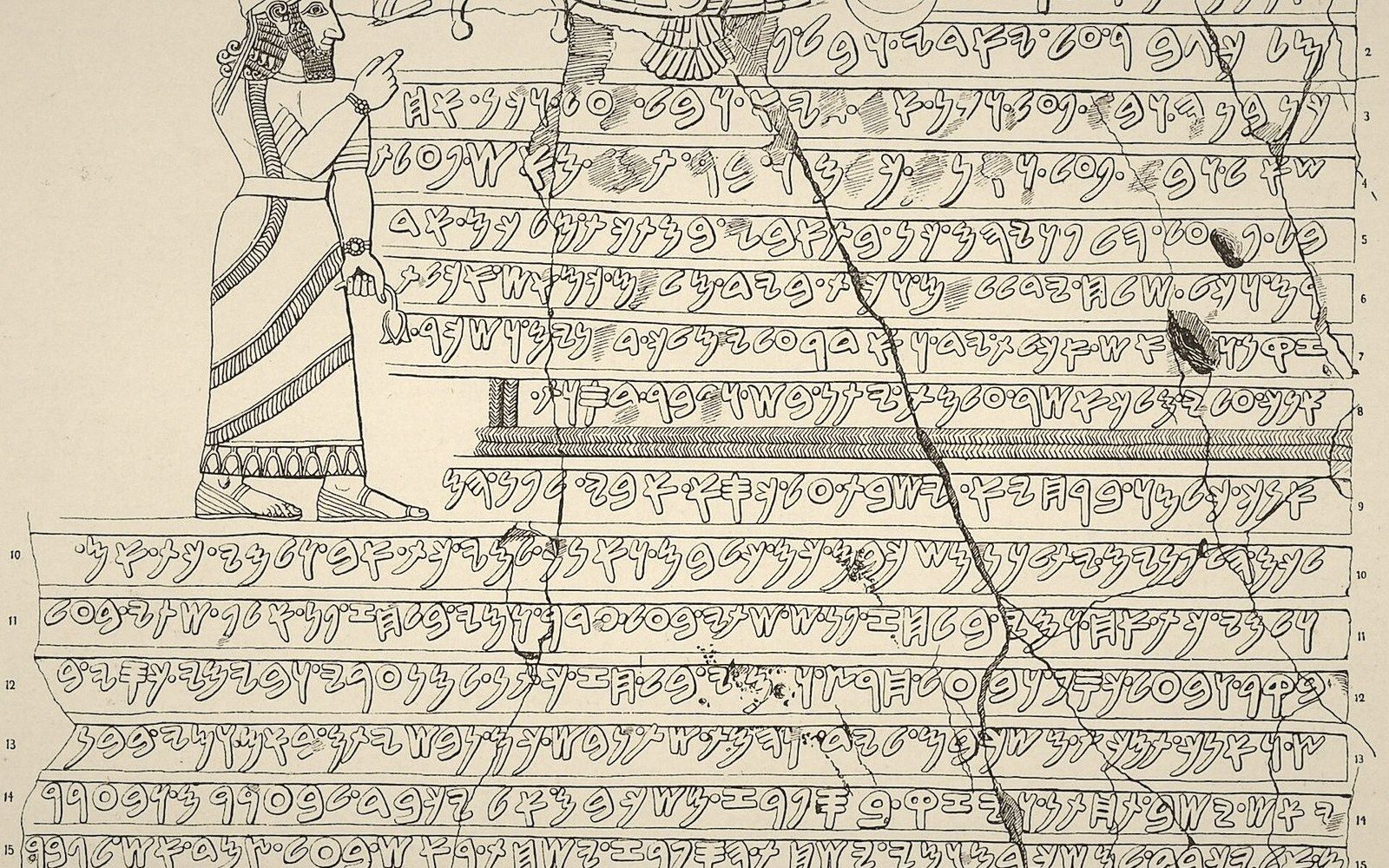 PLATE 1
 PLATE 2
Three Men, One Problem
When Claude Schaeffer's excavations at Ras Shamra began in 1929, the tablets that came out of the ground carried cuneiform signs — wedge-pressed marks recognisable in form but unreadable. They were clearly not Akkadian, the lingua franca of Bronze Age diplomacy that scribes across the region had used for centuries. The sign inventory was far smaller: thirty-odd symbols where Akkadian ran to hundreds. That compression was the first clue. A limited sign set points toward an alphabet, not a syllabary.
Charles Virolleaud, then director of the antiquities service in the French Mandate territory, received the tablets and published the first substantial assemblage in 1929 and 1930. His publication was the act that made decipherment possible for everyone else: it put clean, accurate copies of the signs into circulation. Virolleaud himself began working on the problem immediately, and he identified several recurring short sequences that might represent prepositions or conjunctions — the grammatical connective tissue that any Semitic language uses heavily. He also noted that one sign appeared frequently before proper names, behaving like the prefixed letter that marks the word for "king" or "lord" in cognate languages.
Bauer and Dhorme Close In
Hans Bauer, a German orientalist working in Halle, received Virolleaud's published copies and applied a systematic frequency analysis. Cuneiform alphabet or not, statistical regularities would still govern how letters distribute in a text. Bauer knew Semitic languages well enough to form hypotheses about which high-frequency signs might map to which consonants, and which positions — word-initial, word-final — would attract specific letters in a language of this family. By 1930 he had proposed values for the majority of the signs and sent his results to Paris before publishing them.
 PLATE 3
Édouard Dhorme, a French Dominican priest and one of the foremost Semitists of his generation, was working the same problem by the same methods. He had arrived at overlapping but not identical solutions. The correspondence between Bauer's draft and Dhorme's independent work was close enough to be mutually confirming: where they agreed, the decipherment was almost certainly right; where they disagreed, the disagreement itself was diagnostic. Dhorme refined the values Bauer had proposed, corrected several, and identified a handful that Bauer had missed. His published solution appeared in 1930.
Virolleaud, working from continuous access to new tablets as they came out of the ground, supplied the confirmation. Each fresh text either validated the proposed values or exposed errors, and errors could now be corrected against a growing corpus. By the early 1930s the script had a working reading, and the language it carried — now called Ugaritic, a Northwest Semitic language closely related to the dialects ancestral to Hebrew and Phoenician — was grammatically comprehensible. The Ras Shamra abecedary, a tablet listing the letters in order, would later confirm the full sign inventory and establish its sequence.
Why It Moved So Fast
The speed is worth pausing on. Proto-Sinaitic remained undeciphered for decades after its discovery; Mayan took a generation of concentrated effort by multiple scholars; Linear B held out until 1952. Ugaritic yielded in roughly a year. Several factors converged. The script was a true alphabet — a small, manageable sign set. The underlying language belonged to a family that European orientalists of that era knew intimately. The texts were substantial enough to supply statistical traction from the start: long mythological and administrative compositions, not short dedications. And Virolleaud's prompt, accurate publication meant that three first-rate scholars could work simultaneously from the same data.
What the three men recovered was not merely a new script. The Ugaritic tablets carried the oldest known extensive literature in a Canaanite language — myths, ritual texts, diplomatic correspondence — and they rewrote scholarship on the literary background of the Hebrew Bible and the religious world of the Late Bronze Age Levant. The tablets are now divided principally between the National Museum of Damascus and the Musée du Louvre, where they remain primary documents for anyone working on the origins of alphabetic writing.
Related entries