Core-formed and cast glass was slow, thick, and precious — which is why so little of it survives.
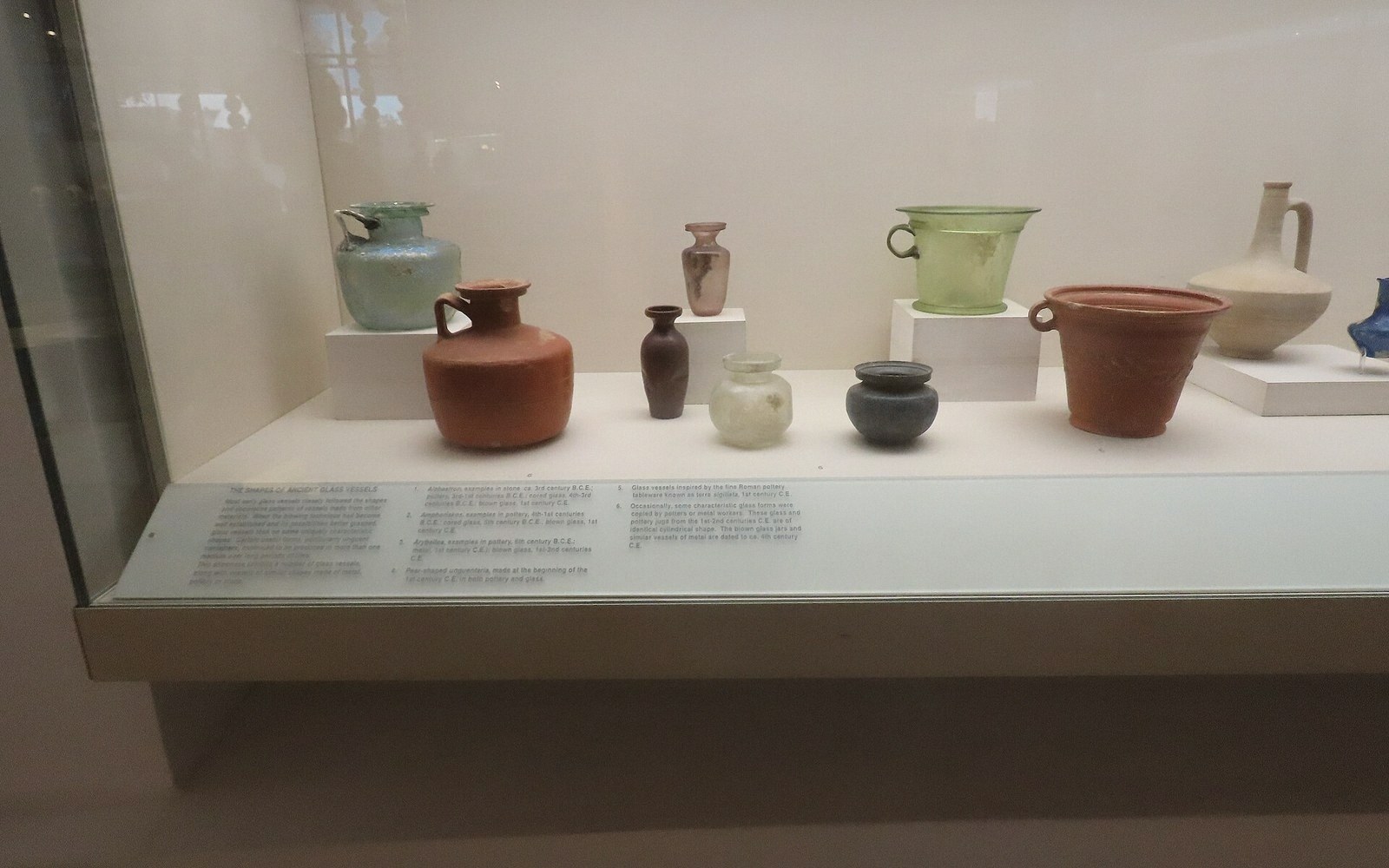 PLATE 1
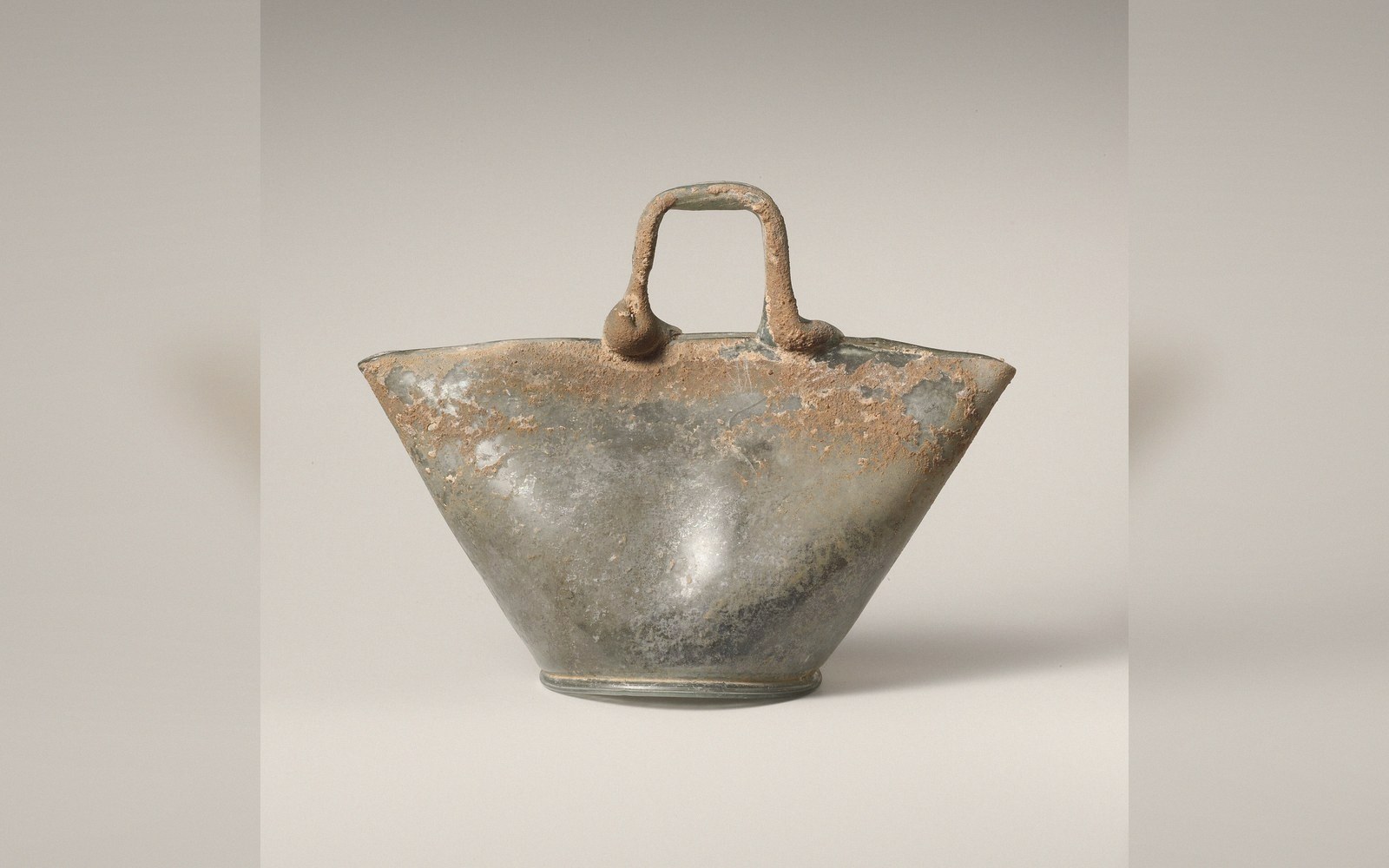 PLATE 2
Sand, Ash, and a Slow Craft
The earliest glass objects from the Levantine coast — small vessels, amulets, inlays — were not blown. They were built up or carved down, techniques that demanded more time per piece than the market could easily absorb and more skill than most workshops could sustain. The blowpipe changed all of that, but it arrived only in the first century BC. For perhaps a thousand years before it, glass was produced by two main methods, each yielding objects that were genuinely rare.
Core-forming is the older technique. A craftsman shaped a core — probably a mixture of clay and dung — around a metal rod, then trailed molten glass over it, working the gather around the form until the vessel walls built up evenly. Threads of differently coloured glass could be trailed over the surface and dragged with a pointed tool to produce the feathered and combed patterns that mark the finest surviving examples. Once the glass cooled, the rod was withdrawn and the core broken out from inside — a process that left traces of gritty residue visible in many museum pieces. The result was thick-walled, slightly irregular, and small: unguentaria, kohl tubes, amphoriskoi holding perfume or oil in quantities measured in millilitres.
Finds from Ugarit (Ras Shamra, on the Syrian coast, approximately 35.599°N, 35.752°E) show that core-formed vessels were already in circulation during the Late Bronze Age, traded alongside the copper ingots, tin, and ivory recorded in palace archives. The Uluburun wreck, recovered from roughly forty-four metres off the coast near Kaş, Turkey, carried glass ingots — raw chunks in cobalt blue, turquoise, and lavender — among its cargo, confirming that raw glass travelled as a commodity alongside finished vessels, a material traded like metal. That wreck is dated to the late fourteenth century BC, and its ingots are consistent with Syro-Palestinian production.
 PLATE 3
Cast, Ground, and Precious
The second technique, casting, produced a different class of object: bowls, plates, and plaques shaped by pouring molten glass into an open mould or pressing it over a former, then grinding and polishing the cooled result on an abrasive wheel. Cast vessels were heavier still, their surfaces achieving a smoothness that core-formed pieces could not match. Coloured with metal oxides — cobalt for blue, copper or iron for green and amber — they circulated as luxury goods among the same courts that commissioned cedar beams and murex-dyed cloth. Several cast bowls of probable Syro-Palestinian origin have been found in Egyptian New Kingdom contexts, and the National Museum of Damascus holds core-formed and cast pieces from Syrian sites that bracket the sequence from the mid-second millennium into the first.
Because each piece required sustained furnace time, skilled manipulation, and careful annealing to prevent cracking, output was low. That is simply why so little exists: not just fragility, but scarcity at the point of manufacture. An unguentarium that held cedar oil or kyphi resin was not a disposable container; it was itself a significant object, sometimes buried with its owner, sometimes passed on. The Musée du Louvre and the British Museum both hold core-formed vessels attributed to Phoenician workshops of the seventh and sixth centuries BC — dates that already fall late in the technique's lifespan, as other methods were beginning to erode its dominance.
What these objects make visible is the cost of glass before speed was introduced. Every feathered trail on an amphoriskos, every polished rim on a cast bowl, represents a calculus of fuel, time, and specialist labour that the blowpipe would eventually collapse. Until it did, glass sat on the same shelf as ivory and gold — materials that justified long sea voyages and careful inventory in palace storerooms — not because the chemistry was exotic, but because making it well was genuinely hard.
Related entries