Hexaplex trunculus and Bolinus brandaris, a gland the size of a fingernail, and thousands of shells for a few grams of dye.
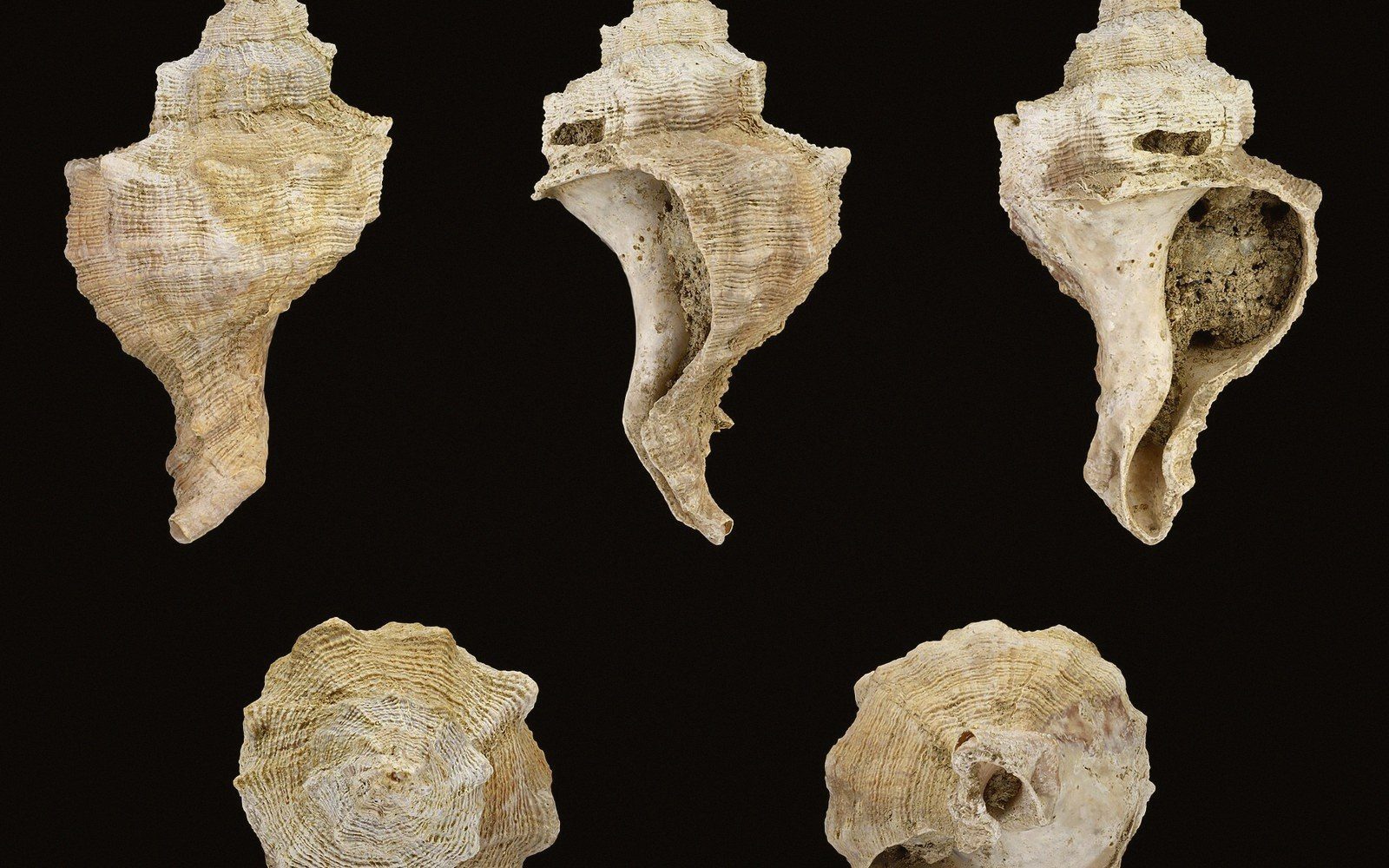 PLATE 1
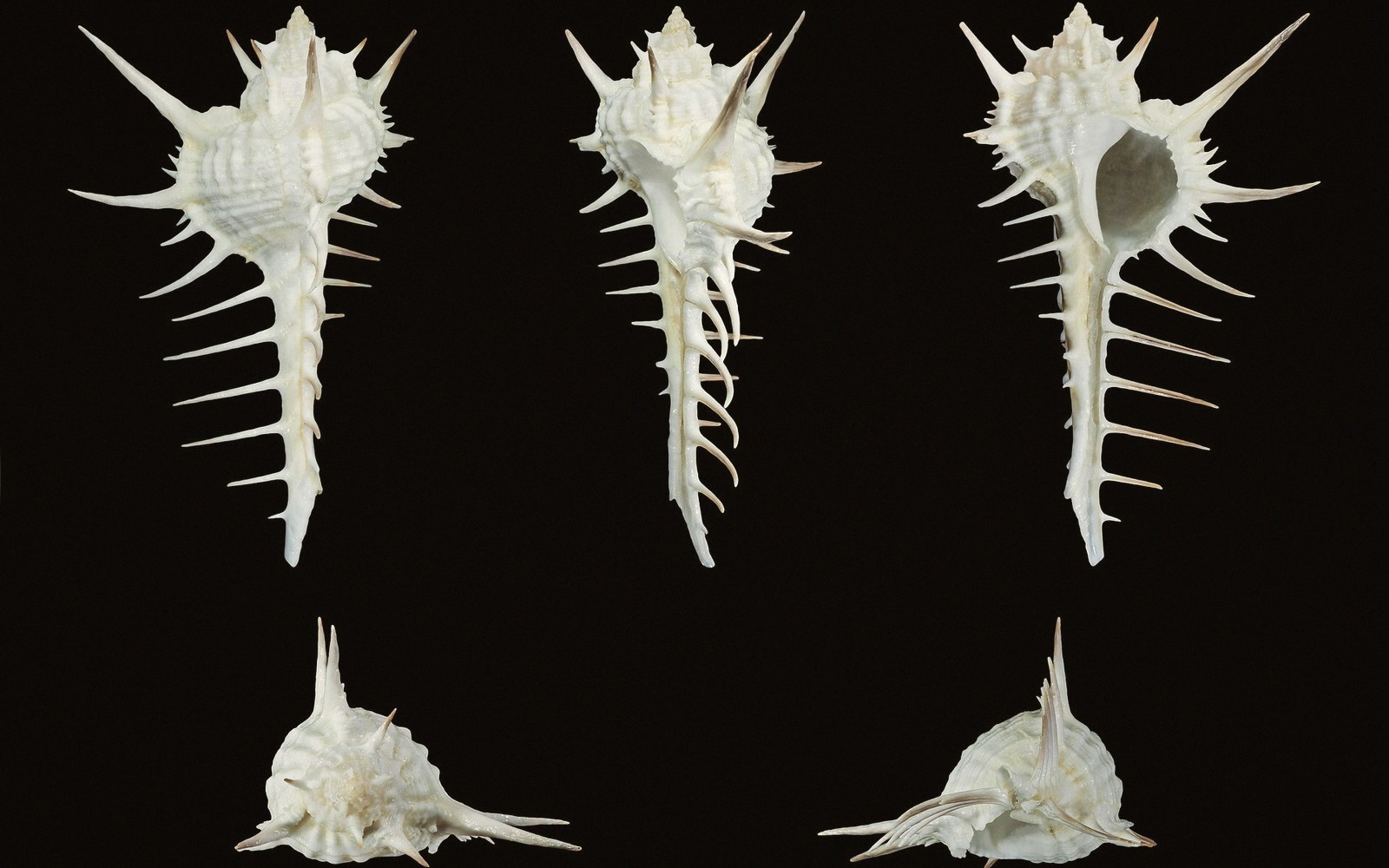 PLATE 2
The animal behind the dye
Two species of predatory sea snail gave the ancient Levant its most coveted colorant. Hexaplex trunculus (the banded dye-murex) and Bolinus brandaris (the spiny dye-murex) are both found across the eastern Mediterranean, both still recovered live from the shallows today. Each carries a hypobranchial gland — a small organ, roughly the size of a fingernail — that secretes a colourless fluid. When the fluid is exposed to air and sunlight, it oxidises through yellow and green before fixing as an intense, fast purple. The chemistry is straightforward; the collection is not.
To yield a gram of usable dye, thousands of shells had to be cracked open, the glands extracted, and the fluid massed together in vats. Ancient producers worked on the scale of thousands of shells per dyeing run. The yield per shell is so low that the mathematics of production alone explain why the colour commanded prices far above almost any other traded commodity. Hexaplex trunculus can produce a blue-violet shade, particularly under specific light conditions and with adjusted processing; Bolinus brandaris tends toward a redder purple. Dyers who understood both species could, in principle, blend results or select for tone, and ancient texts from Ugarit record distinctions between differently coloured purple textiles as separate commodities.
The industrial evidence
The proof of scale is in the waste. Outside Tyre and Sidon, shell mounds — concentrated heaps of crushed and discarded murex — survive as the direct archaeological trace of the dyeing industry. These are not middens in any ordinary sense: the shells are cracked in a uniform way, at the shoulder, to reach the gland without destroying the whole animal. The pattern of breakage is diagnostic. At Sidon's coastal area (approximately 33.5608° N, 35.3719° E), excavations have produced mounds where murex fragments run metres deep. At Tyre (33.2705° N, 35.1963° E), similar deposits are attested, though later urban development has compromised much of the stratigraphy.
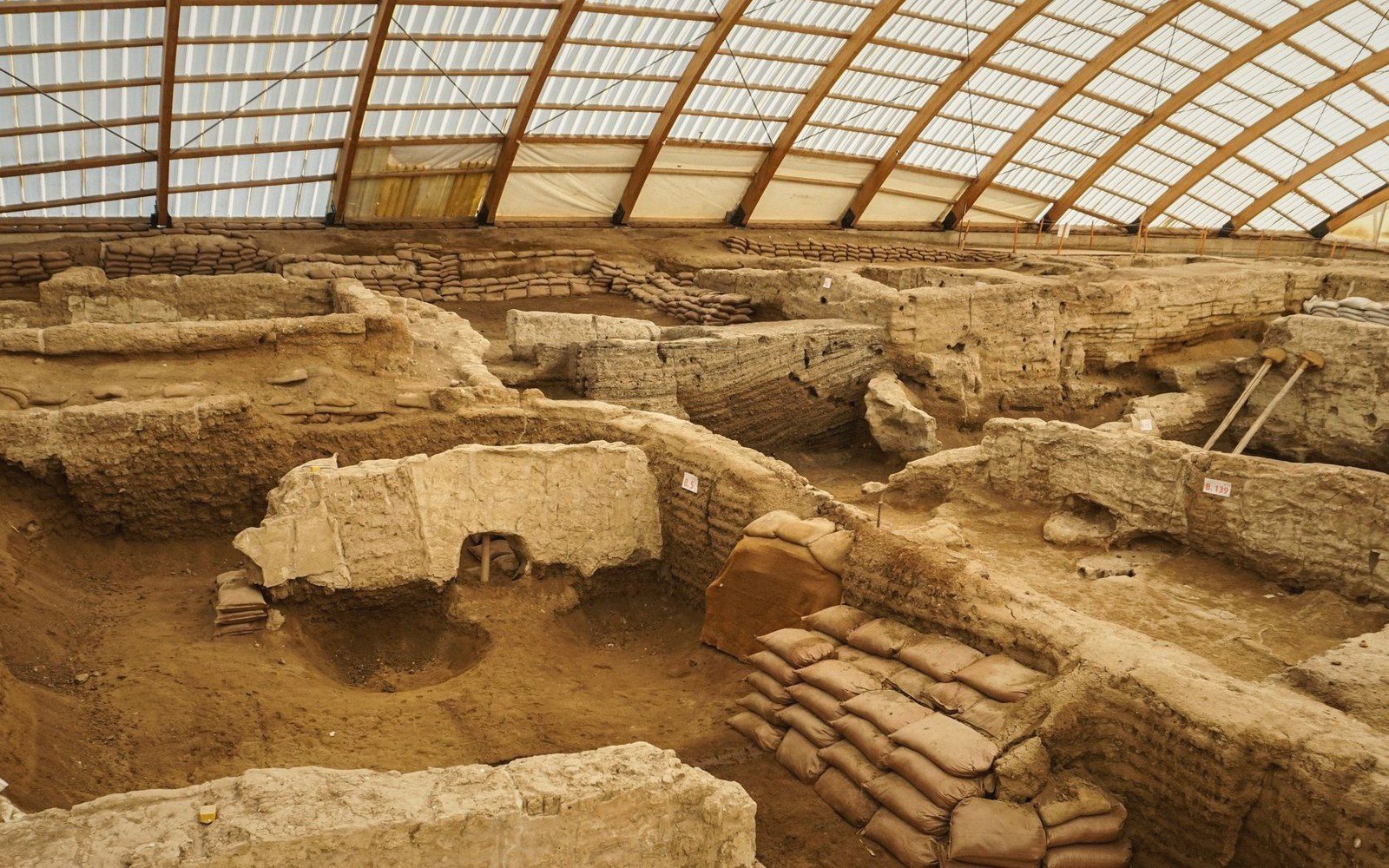 PLATE 3
The smell of a working dye installation would have been extraordinary. Ancient sources consistently locate the vat-houses outside town — not a coincidence of urban planning but a straightforward response to the stench of decomposing mollusc at scale. The dye itself, once fixed to wool, is chemically stable; the process of getting it there is among the most malodorous in ancient industry.
Chemical analysis has confirmed genuine Tyrian purple on surviving textile fragments and on residues found in ceramic vessels. Laboratories working with high-performance liquid chromatography have identified the characteristic compound — 6,6′-dibromoindigo — in material from several Levantine sites, anchoring the literary and archaeological record to actual chemistry. The University of Haifa's research programme has contributed significantly to this identification in recent years, using micro-samples that earlier analytical methods would have destroyed.
What the snail became
The snail was never just a snail. Once the industry scaled up in the second millennium BC, the colour became inseparable from the question of who was entitled to wear it. By the time Phoenician traders were distributing purple-dyed textiles across the Mediterranean, the commodity was already entangled with ideas of rank. Roman sumptuary law — regulation of consumption by social class — eventually codified what the Levantine trade had long made materially true: that purple cloth was rare enough, and expensive enough, to function as a visible marker of power. The colour's grip on that symbolism outlasted the ancient industry itself by centuries.
The snails, meanwhile, are still in the water. Hexaplex trunculus is common enough in the eastern Mediterranean that researchers have successfully recreated ancient dyeing processes from live specimens — crushing the glands, exposing the fluid to sun, watching it turn. The chemistry works exactly as the shell mounds imply it always did.
Related entries