Scratched into turquoise-mine walls in the Sinai peninsula, a handful of signs borrowed from Egyptian hieroglyphics were turned into an alphabet — the oldest known.
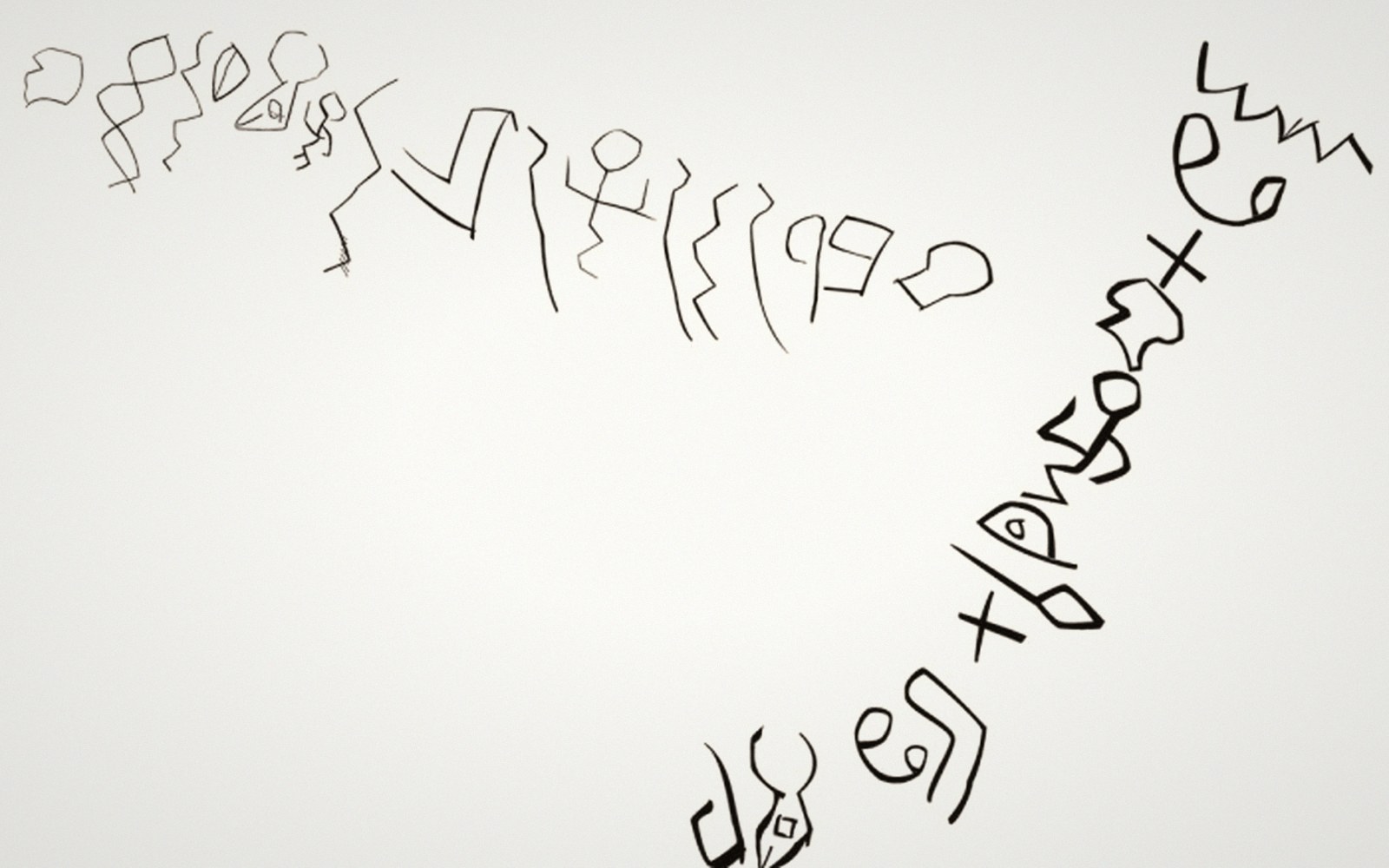 PLATE 1
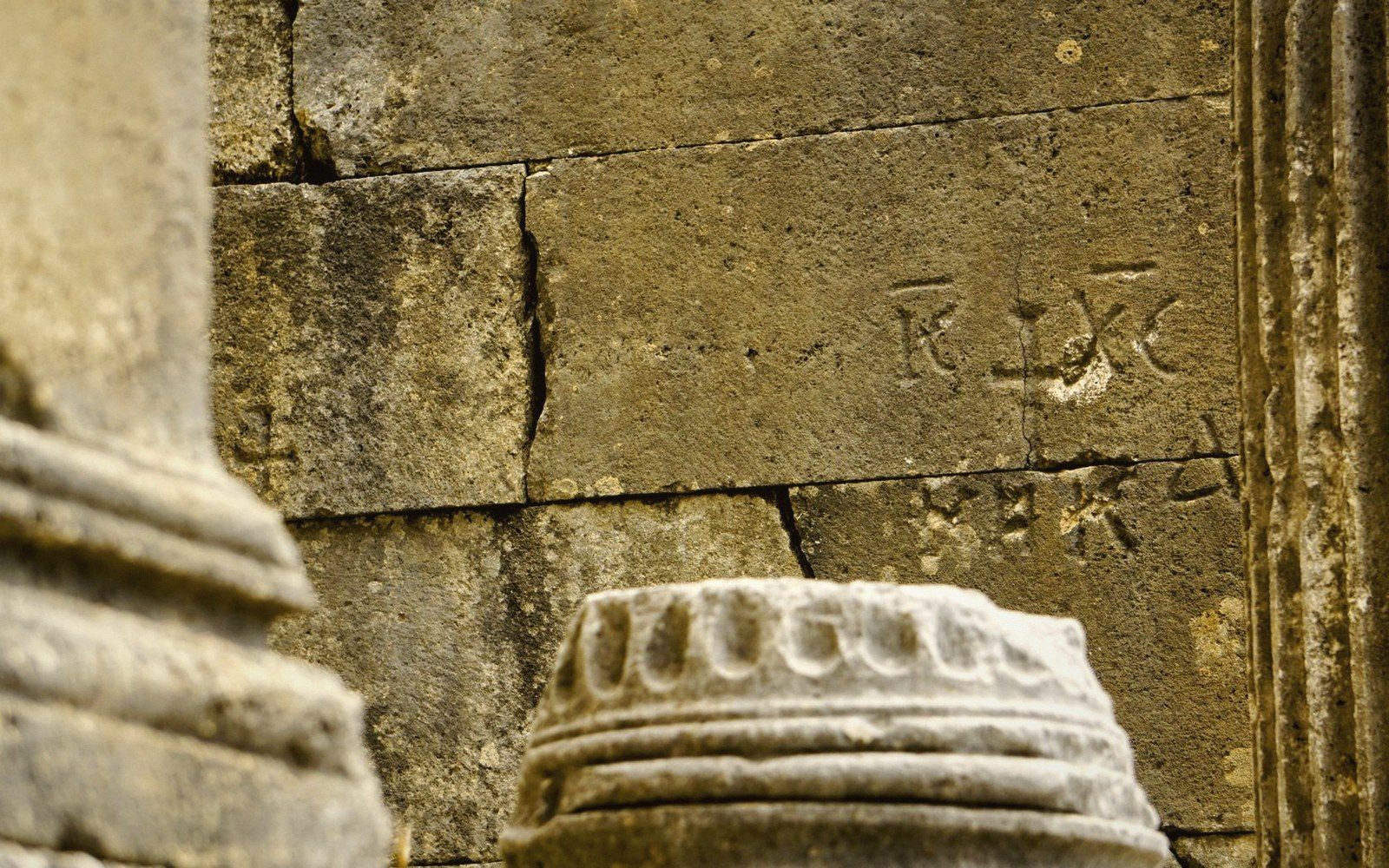 PLATE 2
The mines and what was written there
Serabit el-Khadim (approximately 29.03°N, 33.47°E) sits on a high plateau in the southern Sinai, where Egyptian pharaohs sent expeditions to extract turquoise from at least the Middle Kingdom period. The workforce included Semitic-speaking labourers and overseers from Canaan, and it is among them — not the Egyptian scribal administrators — that someone, probably in the late Middle Bronze Age (broadly the eighteenth to fifteenth century BCE, though the precise range is contested), began scratching a new kind of writing into the rock faces and on small votive objects.
The inscriptions are few: roughly forty examples survive, scattered across the mine shafts, the temple of Hathor that served the site, and a handful of objects now in the Musée du Louvre and the Egyptian Museum in Cairo. They are short and often ambiguous, and most remain only partially read. That they constitute a writing system at all was not recognised until the early twentieth century.
The idea: pictures borrowed for sounds
The system these signs embody is called the acrophonic principle. Take the Egyptian hieroglyph for a house — a square floor-plan with a gap for the door. In Egyptian, the sign is used for its meaning. In proto-Sinaitic, it is used for its sound — specifically for the first consonant of the Semitic word for house, bayt. That sound becomes the letter we now call beth, then the Greek beta, then the Roman B. The sign stopped being a picture and became a phoneme marker.
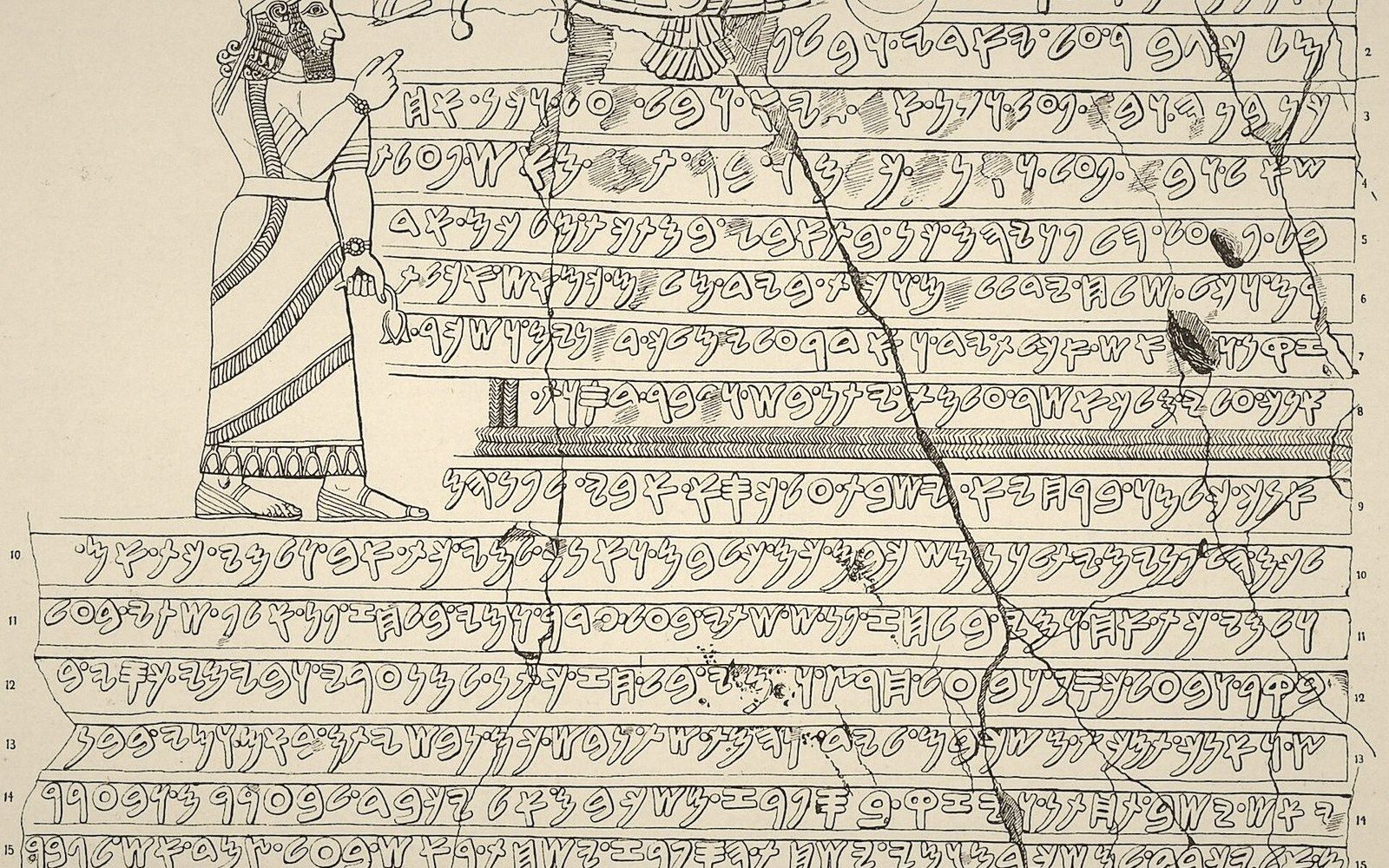 PLATE 3
This is the whole mechanism of the alphabet in embryo: a limited set of images, stripped of their pictorial meaning and reassigned to consonants alone. The proto-Sinaitic script represents only consonants — no vowels — which makes it a consonantal alphabet, or abjad, the same structural type as Phoenician and Hebrew. It carries somewhere between twenty-two and thirty signs, depending on which examples scholars accept as distinct letters rather than variants.
The Egyptian hieroglyphic model supplied the raw visual material, but the linguistic logic was entirely new. Egyptian hieroglyphics are not an alphabet; they are a mixed system of logograms, determinatives and phonetic signs. Whoever designed proto-Sinaitic understood that the Egyptian system contained phonetic components, isolated that principle, and applied it systematically — to a different language, with a fraction of the sign inventory.
From Sinai toward Canaan
The British Egyptologist Flinders Petrie excavated Serabit el-Khadim in 1905 and brought the inscriptions to scholarly attention; Alan Gardiner, working from the published drawings, proposed the acrophonic reading in 1916, identifying several signs and their probable Semitic values. Subsequent work by William Foxwell Albright refined the corpus through the mid-twentieth century, though decipherment of individual words remains uncertain and some proposed readings are disputed.
Related or descendant inscriptions have been found at Wadi el-Hol in Upper Egypt, pushing the possible date of the earliest consonantal writing back toward the early second millennium BCE. Whether proto-Sinaitic is the direct ancestor of the Phoenician alphabet, or whether both descend from an older and still-unrecovered ancestor, is not settled. What is secure is the direction of travel: the Canaanite and later Phoenician scripts share the same letter names, the same acrophonic values and the same consonant-only structure.
The signs scratched into turquoise-mine rock by Semitic workers on the margins of the Egyptian imperial operation are not impressive as objects. They survive in poor condition, on undistinguished surfaces, in a remote location. Their significance is entirely in the idea they encode — that twenty-odd signs, each borrowed from a picture and reused as a sound, are enough to write any word in any language.
Related entries