A royal tomb at Byblos, a carved limestone coffin, and an inscription whose letters are the direct ancestors of the Greek and Latin alphabets.
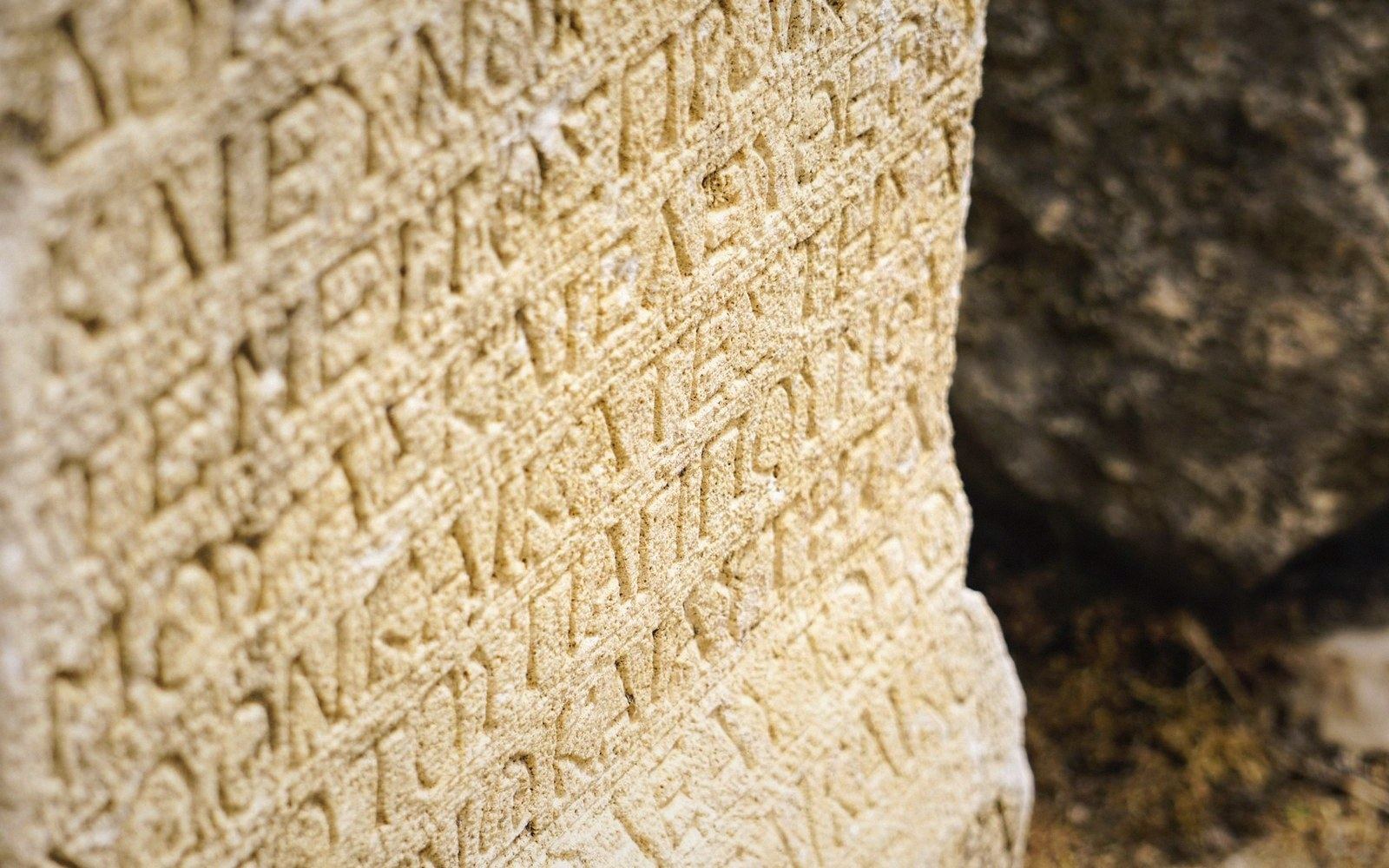 PLATE 1
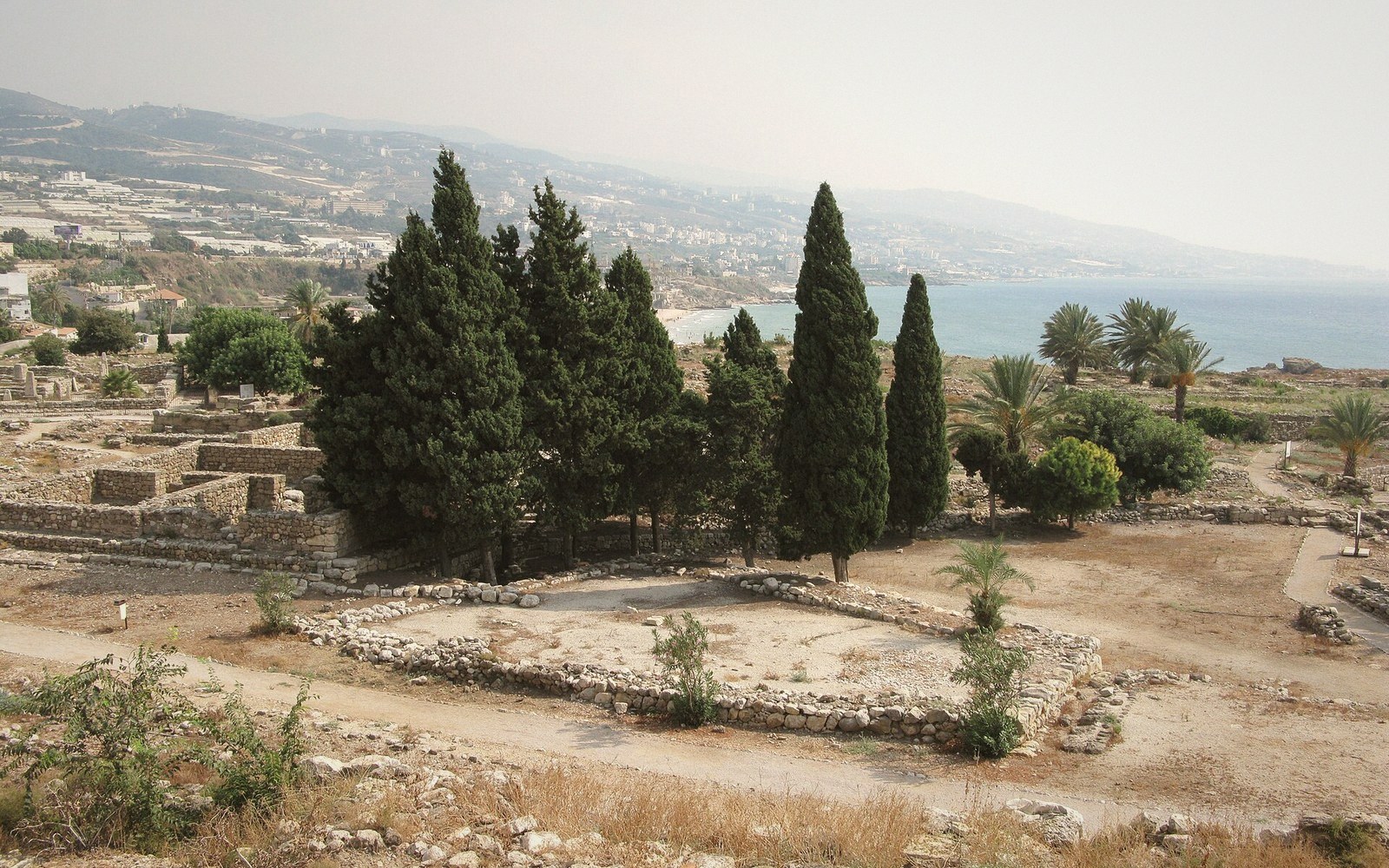 PLATE 2
The Object and Its Context
The sarcophagus of Ahiram was found in 1923 in a tomb shaft cut into bedrock at Byblos — ancient Gebal — on the Lebanese coast (34.1204° N, 35.6517° E). The French archaeologist Pierre Montet, excavating under the mandate-period antiquities authority, reached the tomb when a road-cutting operation broke through its ceiling. Inside lay a large rectangular limestone coffin, its lid carved with a banquet scene: a seated king before a table, mourning figures on the long sides, and on the edge of the lid a row of crouching lions. The iconography is competent Phoenician workshop art of the Late Bronze Age or early Iron Age. The inscription is something else entirely.
Cut into the rim of the coffin and continuing onto the shaft wall is a text in the Phoenician alphabet — roughly thirty words identifying the tomb as Ahiram's and threatening any future king who disturbs it with the loss of his royal staff and throne. It is not the oldest Phoenician text, but it is the most complete early example, and its letter-forms are clear enough to trace directly to what became Greek, then Latin, and eventually the letters on this page.
The Inscription
The text runs right to left, as Phoenician always does. The individual signs — aleph, beth, gimel and the rest — are angular, stripped of the pictographic character they still carry in proto-Sinaitic, but recognisably descended from it. Each sign represents a consonant; vowels are not written. This consonantal principle, the feature that distinguishes the Semitic alphabet from the later Greek adaptation, is already fully in force at Ahiram.
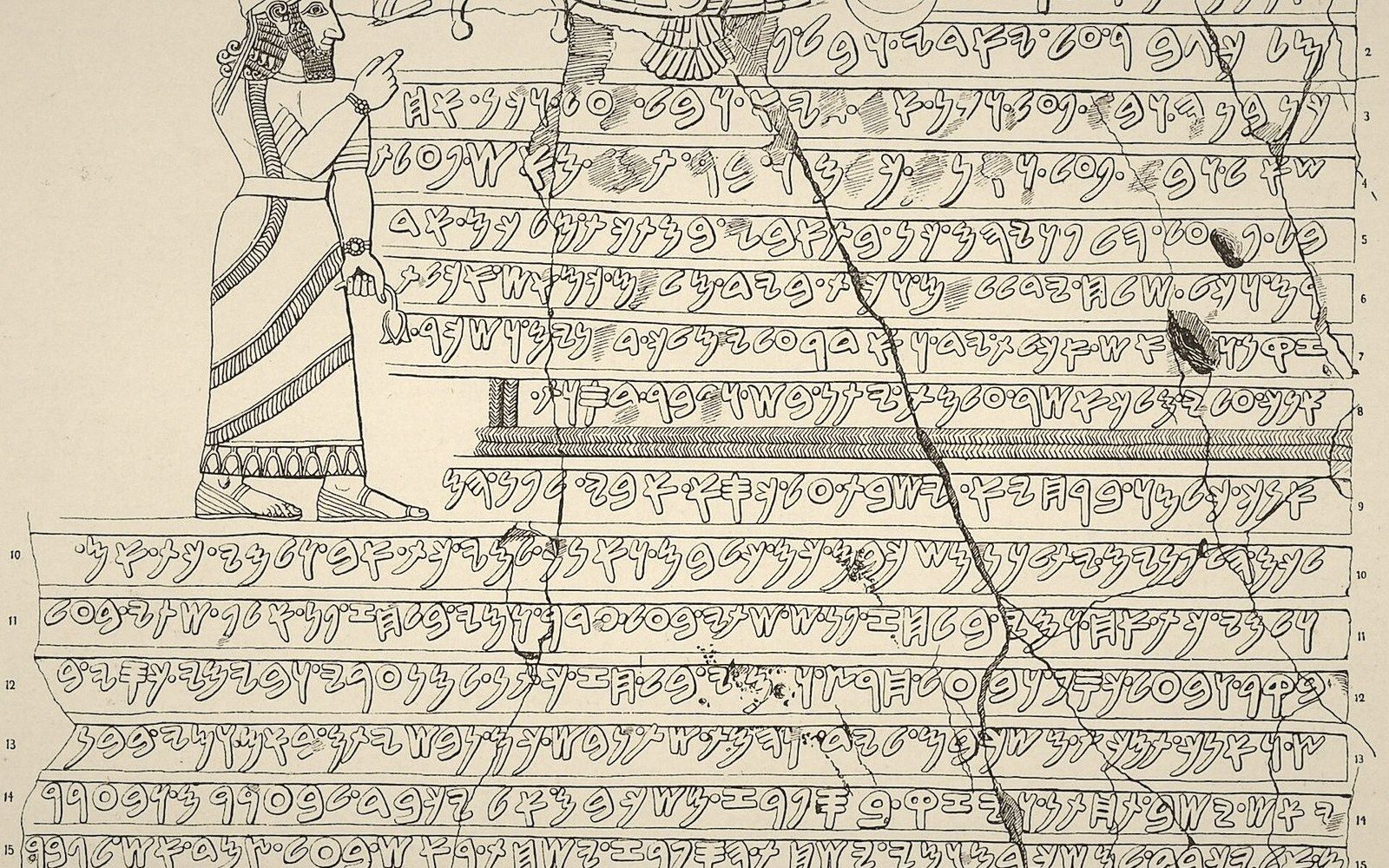 PLATE 3
What makes the Ahiram text significant beyond its content is the stability of its letter-forms. The signs are not experimental or locally idiosyncratic; they look like a mature, settled script in regular use. When the Greeks adopted this alphabet, probably in the ninth or early eighth century BC, they took these shapes and repurposed several signs that had no Greek consonantal equivalent to represent vowels — aleph became alpha, he became epsilon, and so on. The Roman alphabet inherited Greek forms with further adjustments. The genealogy is direct and largely uncontested.
The sarcophagus is now held at the National Museum of Beirut, where it is one of the defining objects in the collection.
The Dating Argument
The date is genuinely contested, and matters. Montet initially placed the tomb in the thirteenth or twelfth century BC on stratigraphic grounds — the shaft was cut through Bronze Age layers and sealed by later fill. If correct, the inscription is among the earliest alphabetic writing yet found, roughly contemporary with the proto-Sinaitic material from Serabit el-Khadim and the early Ugaritic evidence at Ras Shamra.
Later scholars, notably William Albright and after him others working from the palaeography of the letter-forms, argued for a lower date, placing the inscription around the eleventh or tenth century BC. Their case rests on comparing the Ahiram letters with other Phoenician texts whose dates are less disputed — the Nora fragment, the Kilamuwa stele — and noting that the forms fit better in that later sequence. The stratigraphic argument from Montet's excavation has also been queried: the Bronze Age material in the shaft fill could indicate the shaft predates the coffin, which may have been a reuse of an older chamber.
The honest answer is that the letter-forms suggest the tenth century is plausible, the stratigraphy once pointed earlier, and neither side has fully resolved the other's evidence. What is not in dispute is the inscription's place in the chain: Ahiram's letters are the ones that travelled west.
Related entries