Once it was cheap it travelled, which is why Levantine glass turns up across the empire.
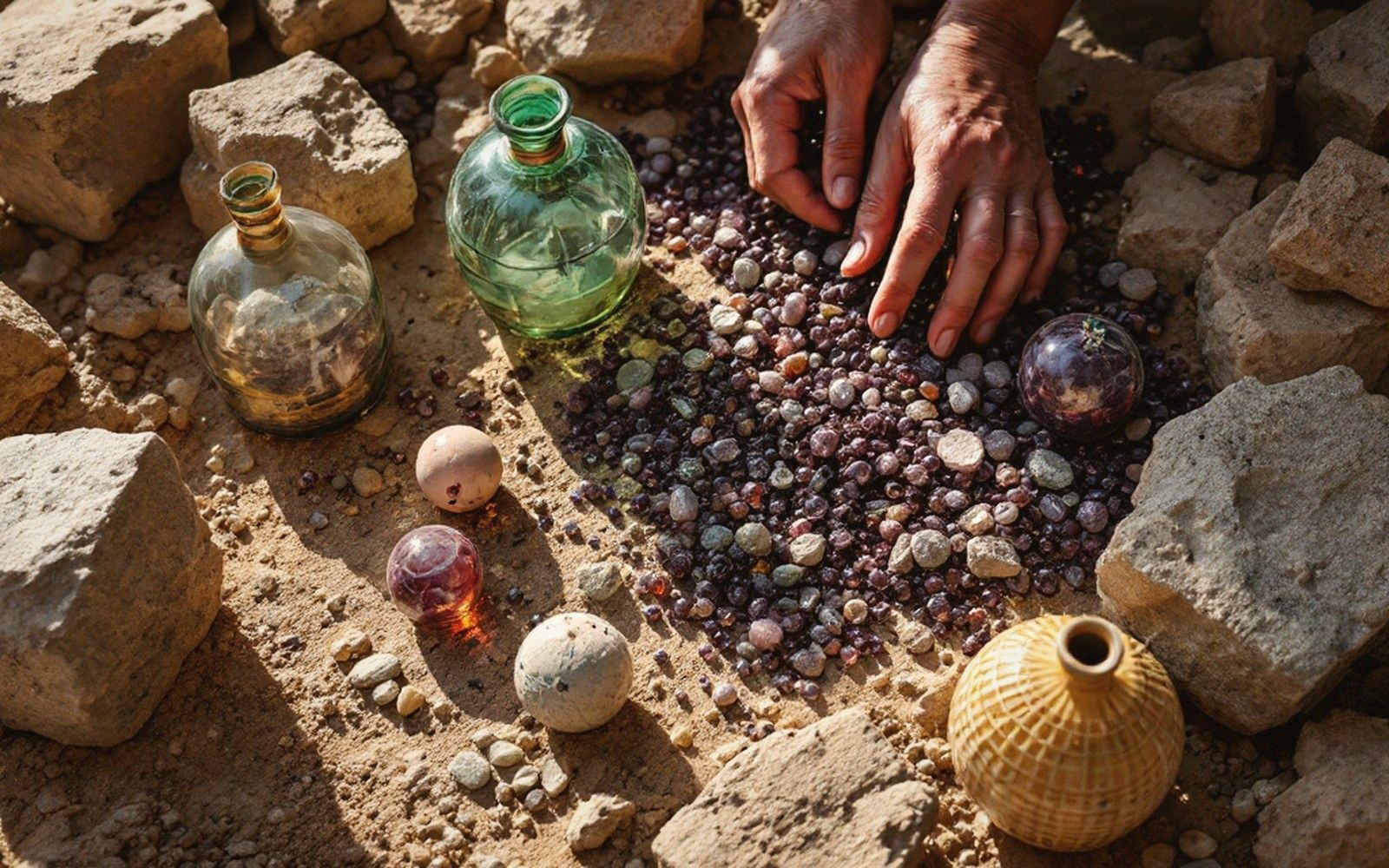 PLATE 1
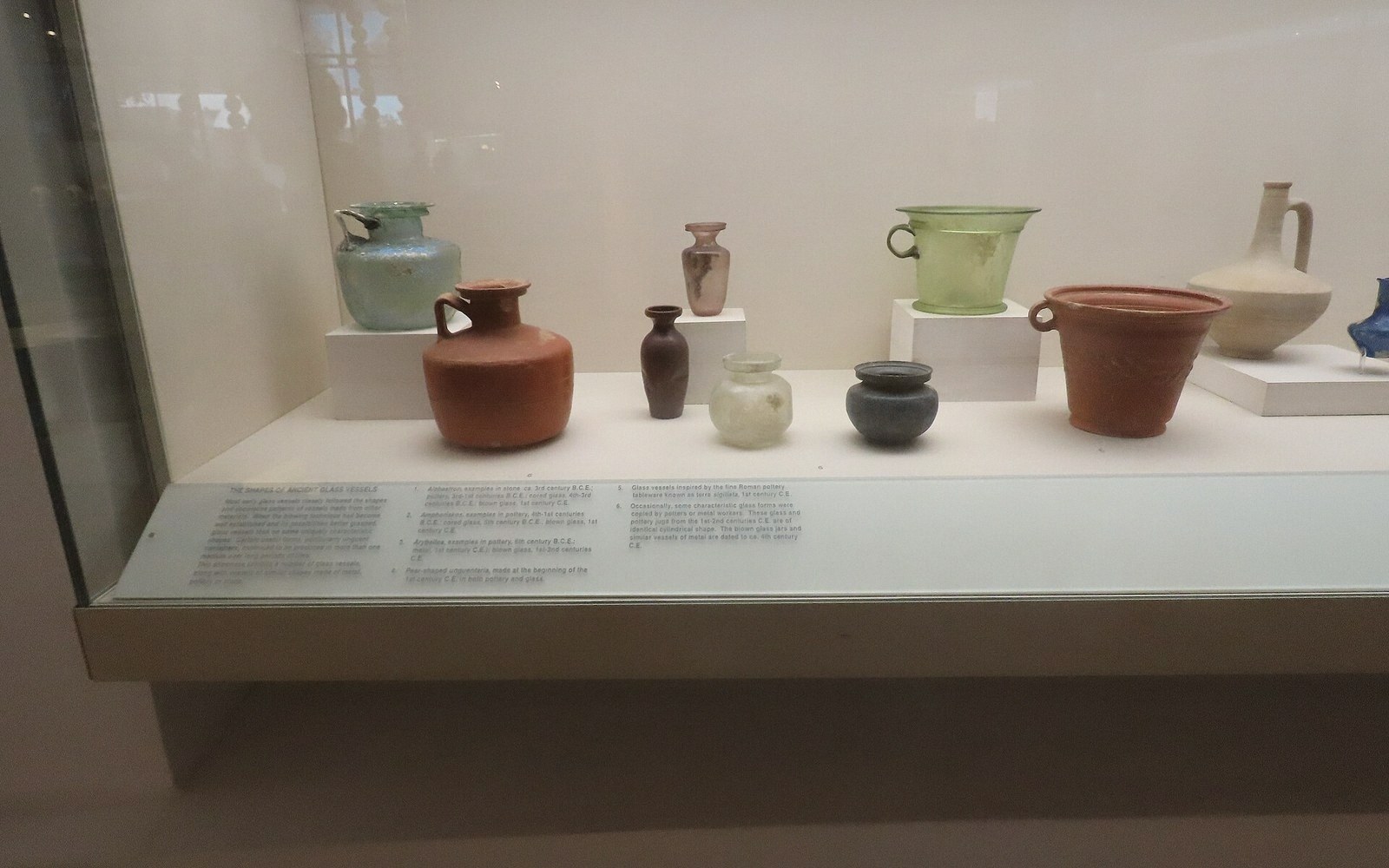 PLATE 2
Once ordinary, it went everywhere
The shift from prestige object to everyday commodity happened fast. By the first century BC, when the blowpipe appeared on the Levantine coast, glassworkers could produce a vessel in minutes rather than days. Within a generation, the output had changed character entirely: not amulets and unguentaria for the wealthy, but cups, flasks and bottles by the thousand.
The Roman trade network was the mechanism that moved this output. Levantine glass — blown in workshops concentrated around Sidon, Tyre and the Belus River valley in what is now northern Israel — entered the same eastward and westward arteries that carried grain, olive oil and wine. Amphorae and wooden crates could be packed with raw glass cullet or finished vessels, and ship cargo pooled both without difficulty. The wreck evidence from the western Mediterranean confirms the volume: assemblages recovered from Roman-period sites across Italy, Gaul, Iberia and North Africa include blown forms with compositional signatures pointing back to Levantine silica sources.
Those signatures are now measurable. Natron glass, the dominant Roman type, has a chemical fingerprint that differs from the ash-flux glass made in northern Europe. Studies of trace elements — manganese, antimony, iron — allow archaeologists to distinguish production regions even when vessels have been reworked or recycled far from their origin. Analysis of assemblages from Levantine coastal sites such as Tyre and the Belus valley has helped build the reference database against which later material is read, though the technique has limits and attribution remains probabilistic rather than certain.
 PLATE 3
The Levantine glass industry did not simply export finished goods: it also exported craftsmen. Glassblowers from Sidon appear in the Latin sources; the Sidonian mark stamped or inscribed on certain vessels in the first century AD has been read as a place-of-origin claim or a workshop brand, though scholars disagree on whether it means the object was made in Sidon or by a worker trained there. The distinction matters, because workshop migrations mean Levantine technique spread to Rome, Cologne and elsewhere while Levantine raw material continued to be shipped as cullet for remelt.
What distribution archaeology recovers is not a single supply line but a layered system: raw glass moving in bulk from Levantine furnaces, finished vessels moving through provincial markets, and itinerant craftsmen carrying the blowpipe method into new regions. The cheapness that made the glass ordinary is also what made it survive in such quantity — broken pieces were worth remelting, but dropped or buried pieces were not worth recovering, which is why provincial rubbish deposits and shipwrecks together constitute the most complete record of the trade.
Related entries